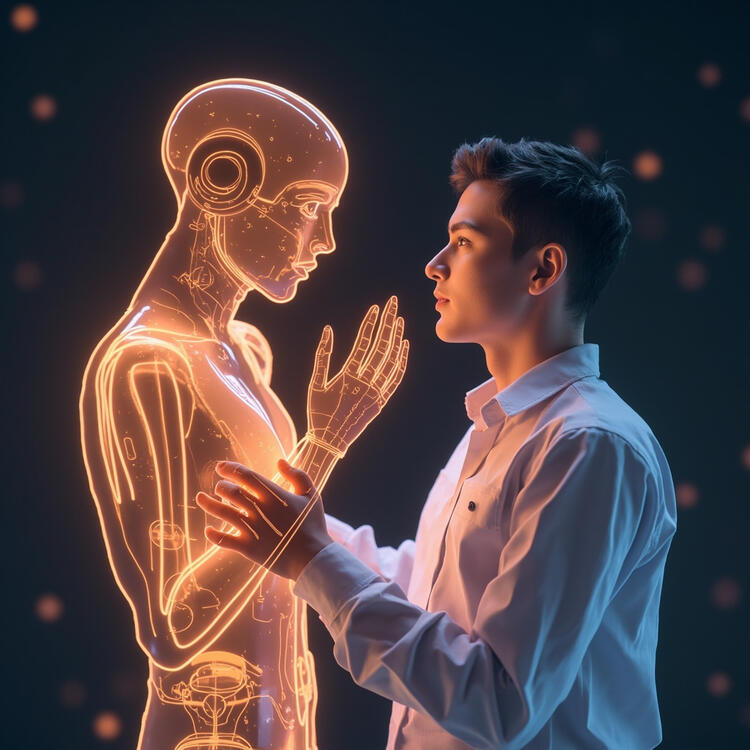
In the race to build more capable AI agents, we've optimized for speed, accuracy, and scale. But in 2026, a surprising skill is emerging as the true competitive advantage: emotional intelligence. While large language models have mastered syntax and reasoning, the agents that win user trust are those that understand not just what we say, but how we feel.
The $32 Billion Emotion Economy
The numbers tell a compelling story. The global emotional intelligence market is projected to grow from $10.29 billion in 2026 to $32.08 billion by 2035, representing a compound annual growth rate of 13.4%. But this figure only captures part of the picture. When we include emotionally intelligent AI specifically, the market explodes to an estimated $45.5 billion by 2034, growing at an even more aggressive 30.4% CAGR.
What's driving this explosive growth? Organizations are discovering that emotionally aware AI delivers measurable business outcomes. According to recent research, 78% of organizations now prioritize emotional intelligence training, while 65% of employers directly link high emotional intelligence with improved employee performance. In customer service applications, emotion-aware AI systems have demonstrated a 34% improvement in customer satisfaction scores and 2.8x faster response times compared to traditional chatbots.
Beyond Sentiment Analysis: The New Science of Digital Empathy
The field has evolved far beyond basic sentiment analysis. Early emotion AI could classify text as "positive" or "negative." Today's systems, powered by advances in natural language processing and computer vision, can detect subtle emotional cues across multiple modalities simultaneously.
A groundbreaking study published in Nature in April 2026 demonstrated that artificial agents with integrated social and emotional learning capabilities achieved a 47% improvement in emotional intelligence scores compared to traditional reinforcement learning approaches. The research showed that agents in densely connected networks achieved the highest emotional response accuracy (0.73), suggesting that social interaction density directly correlates with emotional learning effectiveness.
This finding has profound implications. It suggests that emotional intelligence in AI isn't just about better algorithms—it's about creating environments where agents can learn from social interaction, much like humans do.
From Research to Reality: Where Emotion AI Works Today
The transition from laboratory curiosity to practical application is accelerating across multiple sectors:
Healthcare: The Empathy Interface
Healthcare chatbots now handle everything from appointment scheduling to preliminary mental health screening. But the most effective systems do more than process requests—they recognize distress. When a patient expresses anxiety about symptoms, an emotionally intelligent agent can adjust its tone, provide reassurance, and escalate to human care when appropriate. MIT Media Lab research has shown that empathic AI can even counterbalance the negative impact of anger on creative problem solving.
Customer Service: Beyond Resolution
The customer service sector is experiencing the most visible transformation. Companies deploying computational empathy engines report 65% higher customer satisfaction scores and 50% improved retention rates. These systems don't just solve problems—they recognize when a customer is frustrated, adapt their communication style in real-time, and know when to offer a human handoff.
Education: The Patient Tutor
AI tutors with emotional resonance can detect when students are struggling or frustrated, adjusting their approach accordingly. Rather than pushing harder, they offer encouragement, simplify concepts, or suggest breaks. This emotional awareness transforms education from a one-size-fits-all delivery system into a genuinely adaptive experience.
The Technical Architecture of Empathy
Building emotionally intelligent AI requires a sophisticated technical stack. Modern systems integrate multiple components:
Multimodal Perception: Processing emotional signals across text, voice, and visual inputs. Systems like HumanSense demonstrate how combining these modalities achieves 89% accuracy in emotion detection.
Appraisal Theory Models: Rather than simply labeling emotions, advanced systems use computational models based on appraisal theory to understand why emotions arise. This enables agents to generate contextually appropriate responses rather than relying on scripted empathy.
Emotional Decay Mechanisms: Human emotions persist and evolve over time. Sophisticated AI systems model emotional state transitions, allowing them to maintain appropriate context across extended interactions.
Reinforcement Learning with Emotional Valuation: The most promising research integrates emotional considerations directly into decision-making processes, allowing agents to weigh emotional outcomes alongside task completion metrics.
The Ethics of Artificial Empathy
As emotion AI capabilities advance, so do ethical concerns. The collection of emotional data raises significant privacy questions. Nearly 54% of enterprises report data privacy concerns as a primary barrier to adoption, while 47% highlight the lack of standardized emotional assessment frameworks.
There's also the risk of algorithmic bias. Emotion detection models trained on limited demographic datasets may perform poorly for underrepresented groups, potentially exacerbating existing inequalities. And perhaps most philosophically challenging: if an AI can simulate empathy convincingly, does it matter that the feeling isn't "real"?
These aren't abstract concerns. Research has documented potentially harmful consequences of AI chatbot use among patients with mental illness, highlighting the need for careful deployment in sensitive contexts.
What to Expect in the Next 12 Months
The emotion AI landscape is evolving rapidly. Over the next year, expect to see:
Standardization Efforts: Industry groups are working to establish benchmarks and standards for emotional AI, addressing the current lack of consistent measurement frameworks.
Regulatory Frameworks: As emotional data collection becomes more prevalent, expect emerging regulations around consent, transparency, and data usage.
Cultural Adaptation: Next-generation systems will move beyond one-size-fits-all emotional models to incorporate cultural context and individual differences in emotional expression.
Predictive Emotional Support: Rather than simply reacting to expressed emotions, advanced systems will anticipate emotional needs and proactively offer support.
Building Emotionally Intelligent Systems
For organizations looking to integrate emotional intelligence into their AI systems, the path forward requires both technical investment and ethical consideration:
Start by auditing your current customer touchpoints to identify where emotional awareness could enhance experiences. Pilot empathy-driven chatbots in low-risk scenarios before scaling. Invest in diverse training datasets to minimize bias. And critically, maintain transparency with users about when they're interacting with emotion-aware AI.
The organizations that succeed will be those that view emotional intelligence not as a feature to be bolted on, but as a core design principle. In a world where AI capabilities are increasingly commoditized, the ability to create genuine emotional connection may be the ultimate differentiator.
The Human Element
Perhaps the most important insight from 2026's emotion AI research is that the goal isn't to replace human empathy, but to augment it. The most effective systems don't pretend to feel—they help humans feel understood.
As we build increasingly sophisticated AI agents, we must remember that emotional intelligence isn't just another technical capability to optimize. It's what transforms artificial intelligence from a tool into a partner. In 2026 and beyond, the agents that succeed won't just be the smartest—they'll be the ones that understand us.
Want to build emotionally intelligent AI?
SkillGen helps developers create AI agents with genuine emotional awareness. Learn more about our platform.