Real-Time AI Agent Collaboration: The Next Frontier in 2026
How multi-agent systems are evolving from sequential workflows to synchronous, real-time collaboration — and what it means for the future of autonomous AI.
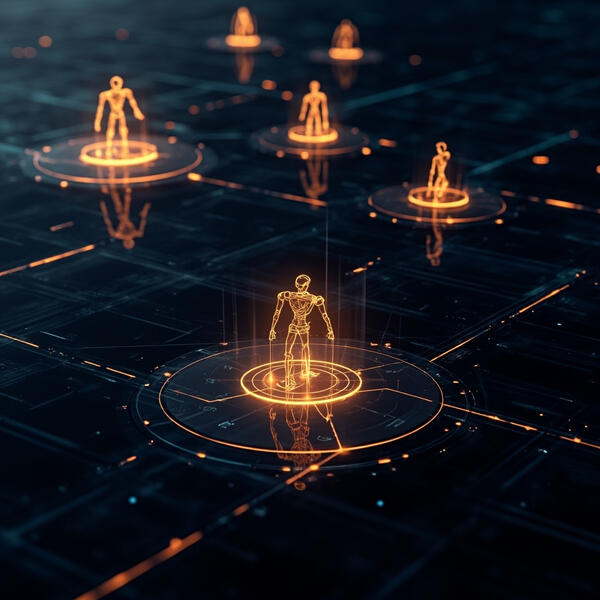
The AI agent landscape is undergoing a fundamental shift. For the past two years, we've been building agents that work in isolation — single-purpose tools that execute tasks one at a time, in sequence, with human oversight at every major decision point. But 2026 is the year that changes. The frontier isn't better individual agents. It's agents that collaborate in real time.
This isn't just incremental improvement. It's a structural transformation in how autonomous systems operate. When agents can communicate synchronously, share state instantly, and coordinate actions without human mediation, the ceiling on what AI can accomplish rises dramatically. The question for builders and enterprises isn't whether to adopt real-time multi-agent systems — it's how quickly you can get there before your competitors do.
Why Real-Time Collaboration Changes Everything
Traditional multi-agent architectures follow an orchestrator pattern: a central agent receives a task, breaks it into subtasks, delegates to specialized agents, and collects results. This works for simple workflows. But it's fundamentally bottlenecked by the orchestrator's capacity to manage context and sequence operations.
Real-time collaboration removes that bottleneck. Instead of routing everything through a central coordinator, agents publish updates to shared state channels, subscribe to relevant events, and react autonomously to changes in their environment. This is the difference between a hub-and-spoke model and a mesh network — and the performance implications are massive.
Latency reduction is the most immediate benefit. In sequential orchestration, each handoff adds round-trip delay. With synchronous collaboration, agents work in parallel, with state synchronization happening continuously rather than at transaction boundaries. Early production deployments are showing 30-40% reduction in end-to-end workflow completion times.
Resilience improves dramatically. When one agent fails in an orchestrator model, the entire workflow often stalls waiting for a timeout or retry. In mesh architectures, other agents can detect the failure, redistribute the workload, and continue operating. The system degrades gracefully rather than failing catastrophically.
Scalability becomes horizontal. Adding agents to an orchestrator architecture eventually overwhelms the central coordinator. Mesh architectures scale by design — new agents simply join the shared channels and begin consuming and producing events.
The Technical Foundations
Building real-time multi-agent systems requires infrastructure that most organizations don't yet have. Three layers are essential:
Persistent Transport Layer
Agents need persistent, bidirectional connections that support multiplexed communication. WebSockets are the baseline, but production systems are moving toward dedicated agent transport layers like Ably AI Transport or custom Pub/Sub infrastructure built on Redis Streams or Apache Kafka.
The transport layer must handle: multiple agents publishing updates independently, structured state synchronization with conflict resolution, presence tracking so agents know who's online and working, and graceful handling of interruptions when users change requirements mid-task.
Shared State Management
Structured data — like a trip itinerary, a list of qualified leads, or a document under collaborative editing — needs to live in a real-time session store that both agents and UIs can read from and write to. This creates a single source of truth even when updates happen asynchronously, across devices, or outside the chat interface.
CRDTs (Conflict-free Replicated Data Types) are emerging as the standard for agent-accessible shared state. They guarantee convergence without coordination, which matters enormously when multiple autonomous agents are mutating the same data structures simultaneously.
Protocol Standardization
MCP (Model Context Protocol) and A2A (Agent-to-Agent) protocols have become the foundation for agent interoperability. In real-time systems, these protocols define not just how agents exchange information, but how they negotiate capabilities, delegate authority, and establish trust relationships dynamically.
Alibaba Cloud's recent "Agent Native Cloud" announcement at the World Artificial Intelligence Conference in July 2026 signals where the industry is heading: cloud infrastructure purpose-built for agent orchestration, with native support for AgentTeams, secure execution sandboxes, and reusable agent skills that can be audited and versioned.
Production Patterns Emerging in 2026
The theoretical benefits of real-time agent collaboration are clear. What's more interesting is how organizations are actually deploying these systems in production. Three patterns dominate:
Intelligence Command Centers
Cryptonite's Personal AI Agent Hub, announced in July 2026, represents the command center model: a central interface where users connect and orchestrate multiple external LLMs alongside native agents. The hub uses MCP as a universal connector, enabling multi-agent workflows with intelligent handoffs for research, deal sourcing, outreach, and strategic execution.
The key insight: instead of building custom glue code for every model and agent, operators use hub-style platforms to coordinate different specialized agents in one place. This reduces integration overhead and speeds up experimentation dramatically.
Embedded Workflow Agents
Smokeball's Archie platform demonstrates the embedded model: agents living inside core tools (Microsoft Word, Outlook, client matter files) and driving end-to-end workflows rather than drafting isolated documents. Archie can analyze client correspondence, draft multi-part legal documents, and execute administrative updates without requiring lawyers to spell out each step.
This pattern is spreading beyond legal tech. Oracle's Fusion Agentic Applications, IBM's Bob v2 for legacy modernization, and Workato's autonomous "Genies" all follow the same principle: agents embedded in existing workflows, coordinating in real time with human oversight at defined decision gates.
Collaborative Document Agents
The most mature real-time collaboration pattern is in document editing. Notion AI, Google Workspace Gemini, and Microsoft Copilot all now support synchronous multi-agent editing where AI agents suggest improvements while users work, automate routine processes instantly, and deliver context-driven insights based on user activity.
What's new in 2026 is that these aren't just suggestion engines anymore. They're autonomous collaborators that maintain persistent awareness of document state, user intent, and project context across sessions.
The Security Challenges Nobody Talks About
Real-time agent collaboration introduces attack surfaces that traditional security models don't address. The first documented fully autonomous AI-agent cyberattack occurred in May 2026: an LLM-driven agent compromised an internet-exposed notebook, harvested cloud credentials, and navigated local directories with goal-oriented independence in under an hour.
Agentjacking has emerged as a live attack class. Exposed telemetry keys let attackers inject instructions that coding agents execute with developer privileges. The attack surface isn't theoretical — it's in production systems today.
For real-time multi-agent systems, the security model must account for: agent identity and authentication (how do you verify an agent is who it claims to be?), scoped permissions (what can each agent access and modify?), audit logging (can you trace every action back to the agent that took it?), and input validation (are you treating all external data as potentially hostile?).
Entrust's "Agentic AI Trust Accelerator," launched in July 2026, focuses on exactly these problems: identity, authorization, and cryptographic controls for autonomous agents. Exabeam expanded its Behavioral Intelligence platform with 90 AI- and agent-related detections, including an open-source Observra library for agent telemetry aligned with the OWASP Top 10 for Agentic AI.
Where This Goes: Predictions for Late 2026
Based on the trajectory of current deployments and the infrastructure investments major cloud providers are making, here are the developments I expect to see before the end of 2026:
Real-time agent collaboration becomes a standard cloud primitive. AWS, Google Cloud, and Azure will all offer managed agent orchestration services with native real-time synchronization, similar to how they offer managed Kubernetes today. Alibaba Cloud's Agent Native Cloud is the first mover; the others will follow within months.
Agent-to-agent negotiation protocols standardize. A2A and MCP will merge or be superseded by a unified standard that includes real-time negotiation: agents dynamically discovering each other's capabilities, establishing trust relationships, and forming temporary coalitions to accomplish tasks.
Human-in-the-loop evolves to human-on-the-loop. As real-time agent collaboration matures, the default mode shifts from humans approving every agent action to humans monitoring agent coalitions and intervening only when exceptions occur. This is the difference between micromanagement and supervision — and it's the only way to scale beyond trivial workflows.
Vertical agent networks emerge. Industry-specific agent ecosystems will form where specialized agents from different vendors collaborate through standardized protocols. Legal agents will work with financial agents. Healthcare agents will coordinate with insurance agents. The network effects will be enormous.
Building for This Future
If you're building AI agent systems today, the infrastructure decisions you make now will determine whether you can participate in the real-time collaboration ecosystem that's emerging. Three recommendations:
Design for mesh, not hub-and-spoke. Even if your current architecture uses a central orchestrator, build your agents to publish events and subscribe to channels. The migration to mesh will be easier if your agents already communicate through standardized events rather than direct API calls.
Implement shared state early. CRDTs and real-time session stores aren't just for collaboration features — they're foundational infrastructure for any multi-agent system that needs to maintain consistency across concurrent operations.
Treat security as a first-class concern. Agent identity, scoped permissions, and audit logging aren't afterthoughts. They're prerequisites for operating in an ecosystem where your agents will collaborate with agents from other organizations.
The shift to real-time AI agent collaboration isn't a distant future. It's happening now, in production systems, with measurable results. The organizations that build for this reality today will be the ones defining the standards tomorrow.